

-
M.G. PAPPAS Rosemary Infused Olive Oil - Polyphenol Rich Olive Oil
Regular price $64.18 USDRegular price $64.18 USDUnit price per -


Atlas 750 mL Organic Cold Press Extra Virgin Olive Oil in Glass Bottle, Polyphenol Rich from Morocco
Regular price $41.70 USDRegular price $41.70 USDUnit price per -
Heraclea - Mature Harvest - Extra Virgin Olive Oil
Regular price $57.59 USDRegular price $57.59 USDUnit price per -
100% EVOO | Italian Organic Olive Oil Extra Virgin Cold Pressed | Very High Polyphenol Rich Early Harvest from Tuscany | Premium Pure Olive Oil
Regular price From $57.37 USDRegular price From $57.37 USDUnit price per -
Venta del Barón - Voted The World's Best Olive Oil - Extra Virgin Cold Pressed - High in Polyphenols - Bottle
Regular price From $68.84 USDRegular price From $68.84 USDUnit price per -
Ciao Sicilian Extra Virgin Olive Oil – First Cold-Pressed, High Polyphenol, Organic, Authentic Flavor, 16.9 Fl Oz
Regular price From $40.18 USDRegular price From $40.18 USDUnit price per -
Heraclea - Everything Oil - Extra Virgin Olive Oil
Regular price $48.57 USDRegular price $48.57 USDUnit price per -
M.G. PAPPAS Polyphenol Rich Olive Oil, Cold Pressed Greek EVOO, 12.7 fl oz
Regular price $64.18 USDRegular price $64.18 USDUnit price per


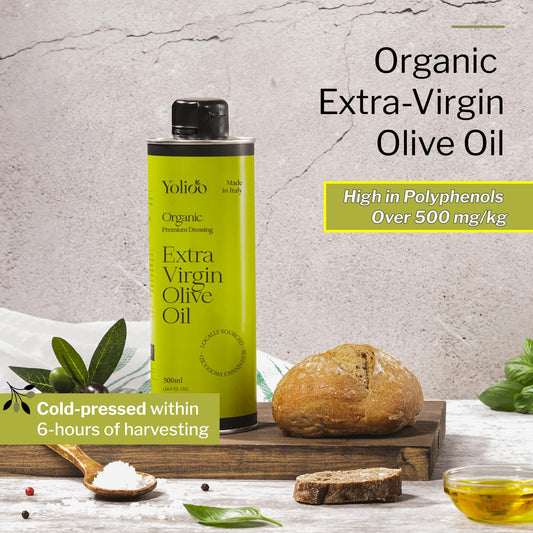


What should you check before choosing a bottle?
Decide whether the oil is part of the recipe's flavor or mainly part of its cooking method. A finishing drizzle and an oil measured into cake batter ask different questions of the bottle. Read the recipe's named oil and the product's flavor description before making a substitution, especially when the oil will be noticeable in the finished dish.
Keep product terms distinct. The oil type, any refinement description and an infused flavor are separate label details. An infused bottle is not the same ingredient as an unflavored version. For heated cooking, use the guidance for the exact oil and cookware rather than assigning one temperature to every bottle in a broad category.
Compare volume and dispensing as well as the label. A pour spout, narrow neck and larger refill container suit different measuring routines. Choose a quantity that fits the recipes you regularly make and the storage directions on the bottle. Keep the original identity and opening information if you use a separate dispenser. When several oils share a shelf, a readable label makes it easier to reach for the intended ingredient instead of changing a recipe unintentionally.
Frequently asked questions
Can I use an infused oil wherever a recipe asks for oil?
Consider the added flavor and the exact product's intended uses before substituting it.
Does every cooking oil have the same heat guidance?
No. Use guidance for the exact oil and cookware rather than a category-wide temperature.
How should I compare bottle sizes?
Compare the stated volumes in matching units and consider the measuring and storage routine you will use.
Should I keep the original bottle information?
Yes. Retain the oil identity and storage directions, particularly if you fill a separate dispenser.